Sod vs Hydroseeding Cost in Rochester, MN: A Complete Guide for Homeowners
- Mar 19
- 6 min read
Sod vs Hydroseeding Cost in Rochester, MN: A Complete Guide for Homeowners. Establishing a new lawn in Rochester requires careful consideration of your budget, timeline, and long-term maintenance goals. Two primary methods dominate the market: sod installation and hydroseeding. Each approach offers distinct advantages, and understanding the cost differences helps you make an informed decision for your southeast Minnesota property.
Rochester homeowners typically invest between $1,915 and $2,594 for professional sod installation, while hydroseeding costs range from $350 to $1,050 for the same lawn size . This significant price difference reflects fundamental differences in materials, labor, and establishment timelines. Your choice depends on how quickly you need results, your property's specific conditions, and your willingness to manage ongoing care.
Understanding the Cost Breakdown
Hydroseeding delivers substantial upfront savings, costing 50 to 80 percent less than sod installation. For a typical 5,000-square-foot Rochester lawn, hydroseeding runs $0.07 to $0.21 per square foot, while sod ranges from $0.60 to $1.65 per square foot installed. These differences multiply across larger properties, making hydroseeding particularly attractive for expansive yards common in Rochester's suburban developments.
Sod costs in Rochester break down as follows: materials alone range from $0.60 per square foot, with professional installation bringing totals to $1.65 per square foot or higher. A 2,000-square-foot lawn typically costs $3,300 for complete sod installation, while the same area costs $140 to $420 for hydroseeding. Labor represents 50 to 60 percent of sod installation costs, reflecting the intensive physical work of hauling, placing, and securing heavy rolls
.
Additional expenses affect both methods. Ground preparation, essential for successful establishment, adds $0.88 to $2.00 per square foot depending on existing conditions. Rochester's clay-heavy soils often require amendment with topsoil or compost, particularly for hydroseeding where seed-to-soil contact proves critical. Removal of existing grass or debris adds $0.88 to $1.84 per square foot
.
Rochester-Specific Climate and Soil Considerations
Southeast Minnesota's Zone 4 climate and clay-dominant soils create unique challenges for lawn establishment. Rochester receives approximately 30 inches of annual precipitation, with significant snowfall creating spring moisture management concerns. Both sod and hydroseeding require careful timing to align with these conditions.
Kentucky bluegrass dominates Rochester sod availability, as this cool-season species withstands Minnesota's temperature extremes.
Hydroseeding offers greater flexibility, allowing custom blends of Kentucky bluegrass, fine fescue, and perennial ryegrass tailored to specific microclimates within your property. This customization proves valuable for Rochester homes with mixed sun and shade conditions common in mature neighborhoods.
Clay soils prevalent throughout Rochester demand particular attention. Sod's established root system provides immediate soil stabilization, preventing erosion during spring rains. Hydroseeding's mulch component offers similar protection once applied, though germination delays create a vulnerable window. Both methods benefit from soil aeration and organic amendment to improve drainage and root penetration in heavy clay .
Timing significantly impacts success. The University of Minnesota Extension recommends late summer and early fall as optimal seeding windows, when soil temperatures remain warm but air temperatures moderate.
Sod installation offers greater flexibility, tolerating installation throughout the growing season with proper irrigation. Spring installations risk summer heat stress without adequate establishment periods.
Establishment Timeline and Usability
The most significant difference between methods involves time to usable lawn. Sod provides immediate green coverage and accepts light foot traffic within two to four weeks once roots establish.
This rapid usability benefits Rochester families with children or pets, homeowners preparing properties for sale, or those seeking immediate erosion control on sloped terrain.
Hydroseeding requires patience. Seeds typically germinate within seven to ten days, with first mowing possible at four to six weeks.
Full establishment, including resistance to normal foot traffic, requires eight to ten weeks. Rochester's shorter growing season amplifies these timelines; late-season hydroseeding may not achieve full maturity before winter dormancy.
Watering demands differ substantially. Sod requires intensive irrigation for the first two weeks, with daily watering necessary to prevent root desiccation. Hydroseeding demands two to three daily waterings for three weeks to maintain consistent moisture for germination. Both methods require careful attention during Rochester's periodic summer droughts, though established hydroseed lawns develop deeper root systems that improve long-term drought tolerance
.
Long-Term Quality and Maintenance
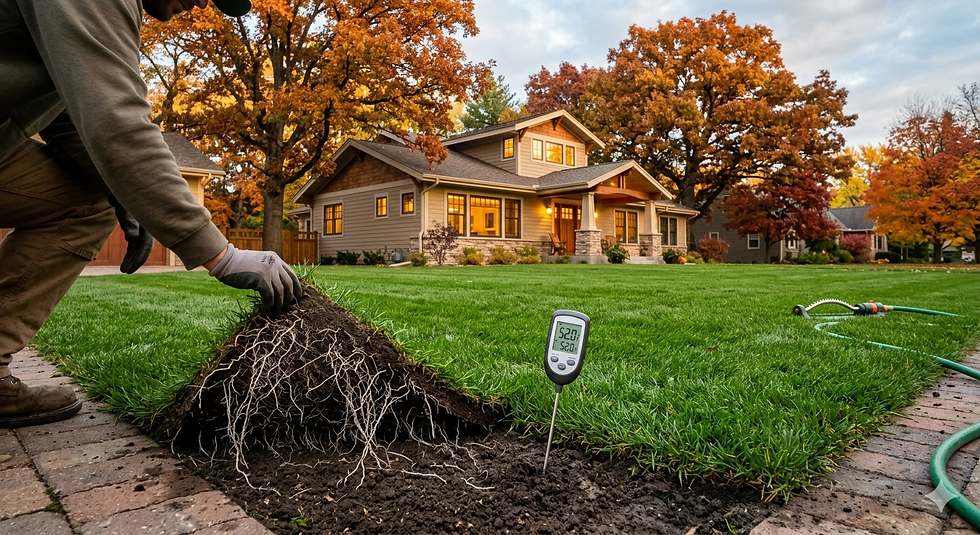
Root system development represents a critical quality distinction. Hydroseeded lawns develop roots naturally in your native soil, creating deeper, more extensive systems that access water and nutrients more efficiently.
Sod roots must bridge the gap between nursery soil and your yard, sometimes creating a layering effect that limits penetration.
This difference becomes apparent during Rochester's dry summer periods, when deep-rooted hydroseed lawns maintain color longer.
Weed pressure varies between methods. Sod arrives relatively weed-free, providing immediate competition against invading species. Hydroseeded lawns face greater initial weed challenges, requiring careful monitoring and selective herbicide applications during establishment. However, proper site preparation and quality seed mixes minimize this disadvantage.
Maintenance requirements converge once establishment completes. Both methods demand regular mowing, fertilization, and irrigation management typical of Minnesota lawns. Hydroseeded lawns may require less supplemental watering once mature due to superior root development, potentially reducing long-term water costs.
When to Choose Each Method
Select sod for Rochester properties when immediate results justify higher costs. This includes homes entering the real estate market, families needing usable yards quickly, or slopes requiring instant erosion control. Sod also suits smaller lawns where the absolute cost difference remains manageable, or where heavy wildlife presence threatens seed viability.
Choose hydroseeding for larger properties where cost savings become substantial, or when specific grass blends address unique site conditions. Patient homeowners who can manage the establishment period achieve excellent results with proper care. Hydroseeding particularly benefits Rochester's newer developments with expansive lots, where the cost difference between methods may exceed several thousand dollars.
Steep slopes present special considerations. Hydroseeding's mulch slurry adheres well to inclines, preventing seed washout during rainfall. Sod requires careful anchoring on slopes to prevent shifting during root establishment. For moderate slopes, either method works with proper installation techniques.
Professional Installation Considerations
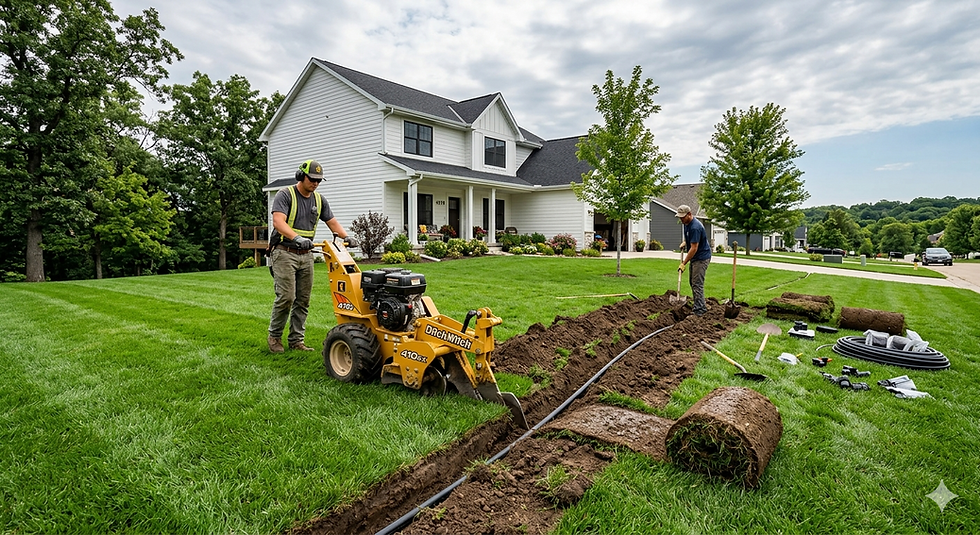
Rochester's clay soils and freeze-thaw cycles make professional installation valuable for both methods. Experienced contractors understand local soil conditions, proper grading for drainage, and irrigation timing specific to southeast Minnesota's climate. DIY sod installation risks improper soil contact and root drying, while DIY hydroseeding requires specialized equipment rarely cost-effective for single projects.
Professional services typically include site preparation, soil amendment recommendations, and establishment guidance. This expertise proves particularly valuable for Rochester homeowners unfamiliar with local grass species performance or challenged by heavy clay soils requiring modification FAQ: Sod and Hydroseeding in Rochester
How much does sod installation cost for an average Rochester yard? For a 5,000-square-foot lawn, expect $3,000 to $8,250 for professional sod installation, including materials and labor
Is hydroseeding really 80 percent cheaper than sod? Yes, hydroseeding typically costs 50 to 80 percent less than sod, with Rochester prices ranging from $0.07 to $0.21 per square foot versus $0.60 to $1.65 for sod
When is the best time to install sod in Rochester? Sod tolerates installation throughout the growing season, though spring and early fall provide optimal conditions for root establishment before temperature extremes
Can I hydroseed my lawn myself? DIY hydroseeding requires specialized equipment rarely available for residential rental. Professional application ensures proper seed distribution, mulch coverage, and establishment success
How long before I can walk on my new lawn? Sod accepts light traffic after two to four weeks. Hydroseeding requires eight to ten weeks before normal foot traffic
Will my clay soil affect installation? Rochester's clay soils benefit from amendment with organic matter for both methods. Sod provides immediate soil stabilization, while hydroseeding requires careful moisture management to prevent crusting .
Which method works better for shaded areas? Hydroseeding allows custom shade-tolerant grass blends, while sod typically offers limited Kentucky bluegrass varieties. Evaluate your specific shade conditions when choosing
Do I need to water differently for each method? Sod requires daily watering for two weeks. Hydroseeding needs two to three daily waterings for three weeks, then gradual reduction as grass matures
Can I install either method in fall? Fall installation works well for both methods, with late August through September providing optimal conditions for root development before winter dormancy
Which option offers better long-term drought tolerance? Hydroseeding develops deeper native root systems that typically outperform sod during dry periods once fully established .
Conclusion
Choosing between sod and hydroseeding in Rochester involves balancing immediate needs against long-term value. Sod delivers instant results at premium prices, while hydroseeding offers substantial savings for patient homeowners willing to manage the establishment process. Both methods succeed when properly installed and maintained, contributing to attractive, functional lawns that enhance property values across southeast Minnesota.
Rochester Sod & Hydroseed specializes in both installation methods, providing expert guidance on the best approach for your specific property conditions, timeline, and budget. Our team understands Rochester's unique clay soils, climate challenges, and grass species performance, ensuring successful lawn establishment regardless of your chosen method.
Contact Rochester Sod & Hydroseed today at https://www.rochestersodandhydroseed.com/ to schedule a site evaluation and receive a detailed estimate for your lawn project. We will assess your soil conditions, discuss your usage timeline, and recommend the most cost-effective solution for achieving the lush, durable lawn your property deserves.


Comments