Sod Installation Before Irrigation Installation in Rochester, MN
Sod Installation Before Irrigation Installation in Rochester, MN. While conventional wisdom suggests installing irrigation before sod, certain circumstances in Rochester require sod installation prior to sprinkler system installation. Understanding when this sequence makes sense, how to manage the challenges, and what steps ensure success helps property owners navigate this less-common but sometimes necessary approach.
For Rochester properties, sod installation before irrigation typically occurs when immediate lawn establishment is required—such as for real estate listings, erosion control, or construction deadlines—while irrigation system planning or funding is finalized. This sequence demands careful coordination to prevent damage to new sod during subsequent irrigation installation, which generally requires 2 to 3 weeks of root establishment before trenching through the lawn .
When Sod-First Installation Makes Sense
Several scenarios justify installing sod before irrigation in Rochester:
Real Estate Timing: Properties entering the spring market may need immediate curb appeal while irrigation system design or permits are pending. Sod provides instant lawn that satisfies listing photography and showing requirements.
Erosion Control: Slopes or disturbed areas requiring immediate stabilization cannot wait for irrigation installation. Sod prevents soil loss while irrigation is planned and installed.
Construction Sequencing: Home construction timelines may deliver finished grading and sod areas before final landscaping decisions, including irrigation, are completed.
Budget Phasing: Property owners may prioritize immediate lawn establishment while deferring irrigation investment to a subsequent budget year.
System Complexity: Properties requiring extensive irrigation design, multiple zones, or specialized water features may need extended planning periods while sod establishes basic ground cover.
The Critical Waiting Period
The success of sod-before-irrigation depends entirely on respecting the establishment timeline:
Root Development Requirements: New sod needs 10 to 14 days minimum to begin root establishment, with 2 to 3 weeks preferred before any trenching or heavy equipment traverses the lawn. During this period, roots penetrate the underlying soil, anchoring sod against disturbance.
The Tug Test: Before allowing irrigation installation, perform the "tug test" by gently lifting sod corners. If roots resist and hold soil, the sod is ready for light traffic. If sod lifts easily, delay irrigation work to prevent tearing and damage.
Watering During Establishment: Without irrigation, new sod requires intensive hand-watering or temporary above-ground sprinklers. Rochester's variable spring and summer precipitation makes consistent moisture management challenging but essential.
Managing Irrigation Installation on Established Sod
Once sod has rooted sufficiently, irrigation installation proceeds with sod-protection protocols:
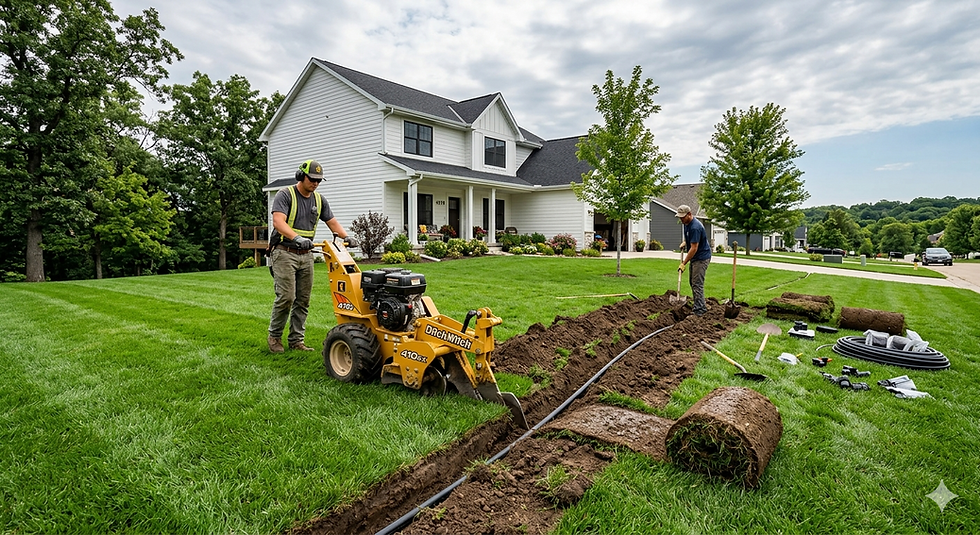
Trenching Techniques: Use vibratory plows or trenchers that minimize sod disruption. Cut sod along trench lines with sharp tools, roll it back, install pipe, then replace and water sod immediately .
Sod Preservation: Remove and set aside sod strips from trench paths rather than discarding. Replace these strips after pipe installation, ensuring soil contact and immediate watering to prevent desiccation.
Timing and Weather: Schedule irrigation installation during mild weather, avoiding extreme heat that stresses disturbed sod. Early morning work allows sod replacement and watering before peak daytime temperatures.
Post-Installation Care: Sod disturbed during irrigation work requires intensive care equivalent to new installation—frequent watering, avoidance of traffic, and monitoring for establishment success.
Rochester-Specific Considerations
Minnesota's climate creates unique challenges for sod-before-irrigation sequencing:
Frost Line Timing: Irrigation systems must be installed below Rochester's 42 to 48-inch frost line, requiring deeper trenches that disturb more sod than in milder climates
. This makes sod preservation and replacement more critical.
Clay Soil Compaction: Rochester's clay-heavy soils compact severely when worked wet. Irrigation trenching in spring-saturated soils creates ruts and compaction that damage sod beyond the immediate trench line. Wait for soil conditions that allow clean trenching without excessive smearing.
Seasonal Windows: Sod establishes best in late August through September in Rochester. However, irrigation installation must complete before ground freezing—typically mid-October—creating a narrow window for combined projects.
Spring Challenges: Spring sod installation followed by irrigation work risks summer heat stress before full establishment. If using this sequence, prioritize drought-tolerant sod varieties and ensure temporary watering capabilities.
Cost Implications
Sod-before-irrigation sequencing affects project economics:
Sod Costs: Standard $1.35 to $2.40 per square foot for Rochester sod installation
, with potential premiums for expedited scheduling.
Irrigation Costs: $2,246 to $3,115 for typical Rochester residential systems
, with potential increases for sod-preservation techniques and repair of disturbed areas.
Risk Premium: The sod-first approach carries higher risk of sod damage during irrigation work, potentially requiring 10 to 20 percent additional sod for repairs.
Long-term Value: Despite higher initial complexity, successful execution delivers established lawn with automated irrigation—ultimately the desired outcome for most Rochester properties.
Professional Coordination
Success requires seamless coordination between sod and irrigation contractors:
Communication: Sod contractors must know irrigation is planned to avoid compacting soil in future trench paths. Irrigation contractors need sod establishment timelines to schedule work appropriately.
Site Planning: Marking future irrigation routes allows sod installation to avoid these areas or prepare them for subsequent disturbance.
Quality Assurance: Professional oversight ensures sod establishment before irrigation work, proper sod preservation during trenching, and effective post-installation care.
FAQ: Sod Before Irrigation in Rochester
How long must sod establish before irrigation installation? Wait 2 to 3 weeks for adequate root development, confirmed by the tug test showing sod resistance to lifting.
Will irrigation installation kill my new sod? Not if properly managed. Use sod-preservation trenching techniques, replace disturbed sections immediately, and provide intensive post-installation watering .
Can I install sod and irrigation simultaneously? Yes, and this is preferred when possible. The sod-first sequence is reserved for situations requiring immediate lawn establishment before irrigation is ready.
What if my sod dies before irrigation is installed? Without consistent watering, sod can desiccate within 24 to 48 hours in summer heat. Temporary sprinklers or diligent hand-watering is essential during the establishment period.
Is sod-before-irrigation more expensive? Yes, due to sod preservation labor, potential repair sod needs, and coordination complexity. However, it may be necessary for timing or budget constraints.
What sod varieties work best for this sequence? Kentucky bluegrass provides excellent establishment and recovery from disturbance. Tall fescue offers drought tolerance if temporary watering fails.
Should I delay irrigation until fall if sod is installed in spring? Yes, if possible. Installing sod in spring, allowing full summer establishment, then adding irrigation in fall minimizes disturbance risks and ensures robust sod for trenching.
How do I water sod without irrigation? Use oscillating or pulsating sprinklers moved systematically across the lawn, or hire temporary irrigation services. Water 2 to 4 times daily for the first 2 weeks, then daily until roots establish.
Can I walk on sod during irrigation installation? Minimize all traffic during the first 2 weeks. During irrigation work, use plywood paths to distribute weight and prevent compaction.
What if Rochester weather turns hot during establishment? Increase watering frequency immediately. Sod in heat without irrigation requires 3 to 5 daily waterings to prevent desiccation and death.
Conclusion
Sod installation before irrigation in Rochester is achievable but demands careful management of the establishment period, sod preservation during subsequent irrigation work, and intensive post-installation care. While not the preferred sequence, this approach succeeds when immediate lawn establishment is required and proper protocols are followed.
The key to success lies in respecting the 2 to 3 week establishment window, using sod-preservation trenching techniques, and providing consistent moisture throughout the process. Professional coordination between sod and irrigation contractors ensures that the temporary inconvenience of this sequence delivers the lasting value of established lawn with automated irrigation.
Rochester Sod & Hydroseed specializes in sod installation sequencing tailored to southeast Minnesota's specific conditions. Our team understands the establishment requirements, soil characteristics, and coordination needs that ensure success whether sod precedes or follows irrigation installation.
Contact Rochester Sod & Hydroseed today at https://www.rochestersodandhydroseed.com/ to discuss your project sequencing. We will assess your timeline, budget, and site conditions to recommend the optimal approach for your Rochester property, ensuring beautiful, durable lawn establishment regardless of installation order.


Comments