Hydroseeding After Septic Installation in Rochester MN
- Feb 28
- 9 min read
Hydroseeding After Septic Installation in Rochester MN. Installing a new septic system disrupts your entire yard, leaving behind compacted soil, bare trenches, and a landscape that looks more like a construction zone than a home. For Rochester homeowners, the question becomes how to restore that area effectively without compromising the expensive septic work just completed. Hydroseeding offers an ideal solution for large disturbed areas, providing even coverage, erosion control, and cost-effective lawn establishment when done correctly.
Understanding the Septic Installation Impact
Septic system installation in Rochester typically involves extensive excavation. The drain field requires trenches spanning thousands of square feet. The septic tank itself needs a large access pit. Connecting lines run between house and field, often crossing driveways and yard areas. Equipment access routes further compact soil and strip vegetation.
This disruption creates specific challenges for lawn restoration. Soil structure suffers from heavy equipment compaction, reducing drainage and root penetration. Topsoil mixes with subsoil, creating layers that resist plant establishment. Underground lines and components restrict what can be planted where. The disturbed area often spans more area than homeowners initially expect, making sod installation prohibitively expensive.
Hydroseeding addresses these challenges through efficient coverage of irregular areas, customized seed mixes for varying conditions, and erosion control during the critical establishment period.
Waiting Period: When to Hydroseed After Septic Completion
Timing matters significantly for hydroseeding success after septic work. Several factors determine the appropriate waiting period.
Soil settlement must occur before seeding. Backfilled trenches settle significantly in the first weeks after installation, creating depressions that would collect water and drown seedlings. Most Rochester contractors recommend waiting two to four weeks for initial settlement, then grading to level before hydroseeding.
Soil moisture conditions affect germination and equipment access. Saturated soils from recent backfilling prevent equipment operation and create muddy conditions where seed cannot establish. Allow soil to dry to workable consistency, typically one to two weeks after final grading depending on weather.
Septic system testing and approval should be complete. Minnesota requires pressure testing and inspection of new septic systems. Scheduling hydroseeding before approval risks damage if repairs are needed. Coordinate with your septic contractor to confirm system acceptance before lawn restoration begins.
For most Rochester septic installations, four to six weeks after backfill completion provides the optimal hydroseeding window. This allows settlement, drying, and approval while getting vegetation established before winter.
Soil Preparation for Hydroseeding Success
Proper preparation determines whether hydroseeding thrives or fails on septic-disturbed soils.
Decompaction of trench areas restores soil structure for root penetration. Core aeration, rototilling, or subsoiling breaks up compacted layers created by equipment traffic. For severe compaction common in Rochester's clay soils, professional decompaction with specialized equipment may be necessary.
Topsoil replacement or amendment addresses the mixing problem. Septic excavation typically buries valuable topsoil beneath subsoil. Importing two to four inches of quality topsoil over disturbed areas creates proper growing medium. Alternatively, tilling in compost and organic matter improves existing soil structure.
Grading for drainage prevents water accumulation that kills seedlings. Slope trench areas away from structures and septic components. Create gentle swales that direct surface water without creating erosion channels. Ensure positive drainage across the entire disturbed area.
Rock and debris removal eliminates hazards for future mowing and maintenance. Septic excavation often brings stones to the surface. Raking and removal prevents equipment damage and creates smooth, safe lawn areas.
Septic-Safe Hydroseeding Practices
Protecting your new septic system during lawn restoration requires specific awareness.
Maintain safe distances from septic components. Keep heavy hydroseeding equipment at least ten feet from drain field trenches and tank access points. The weight of full slurry tanks can damage underground components. Use hose extensions to reach closer areas without driving over sensitive zones.
Avoid deep cultivation near lines and tanks. Drain field pipes lie shallow, typically eighteen to thirty inches below grade. Deep tilling or ripping can damage these components. Use shallow cultivation or surface amendment only in these critical areas.
Select appropriate vegetation for septic areas. Grasses with shallow, fibrous root systems work best over drain fields, promoting evapotranspiration without clogging soil pores. Deep-rooted trees and shrubs belong well away from septic components where roots cannot infiltrate lines.
Mark all access points and components before hydroseeding. Septic tank lids, cleanout ports, and distribution boxes must remain accessible for future maintenance. Permanent markers or shallow-buried indicators help locate these features after lawn establishment.
Seed Selection for Septic Area Conditions
Rochester's climate and septic area constraints guide appropriate seed choices.
Kentucky bluegrass provides traditional lawn appearance with moderate root depth suitable for drain field areas. Its rhizomatous growth fills in well, creating uniform coverage. However, it requires more moisture and maintenance than some alternatives.
Fine fescue blends offer excellent performance in the partial shade common around septic mound systems. Their drought tolerance reduces irrigation needs once established. The bunching growth habit means slower fill-in but less aggressive spread into unwanted areas.
Tall fescue develops deeper roots than bluegrass, making it less ideal directly over drain fields but excellent for surrounding areas. Its heat and drought tolerance suits Rochester's increasingly variable summers.
Native grass mixes provide low-maintenance alternatives for larger septic fields where traditional lawn aesthetics matter less. Prairie dropseed, little bluestem, and sideoats grama establish well from hydroseeding and require minimal ongoing care.
Most Rochester septic area hydroseeding uses custom blends combining these species for specific site conditions, typically 60 to 80 percent fine fescue with bluegrass and native components as appropriate.
Erosion Control During Establishment
Septic-disturbed soils are highly vulnerable to erosion before vegetation establishes.
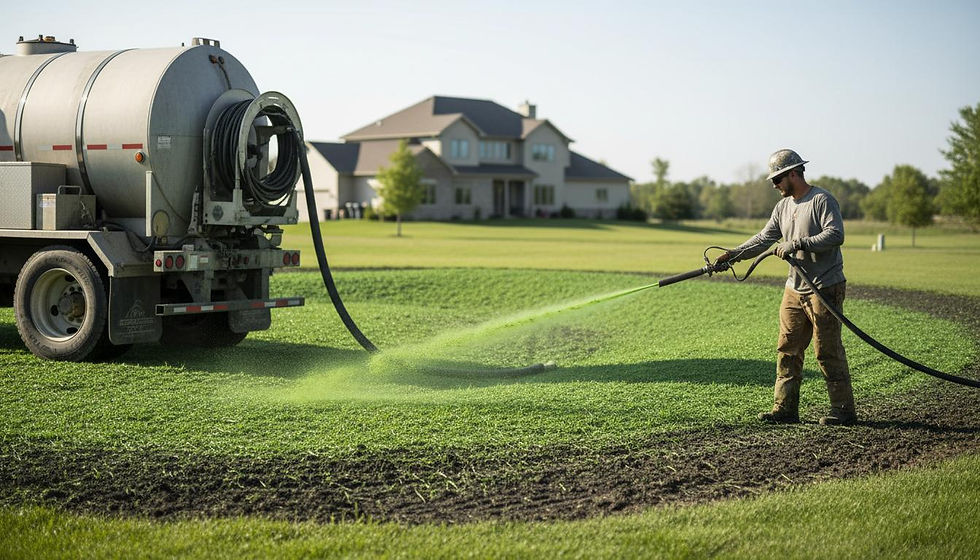
Straw or fiber mulch incorporated in the hydroseeding slurry provides initial surface protection. The green mulch layer visible after application shields soil from rain impact and reduces surface flow velocity. This built-in protection makes hydroseeding superior to bare seeding for septic areas.
Erosion control blankets may be necessary for sloped drain field mounds or areas with concentrated flow. These biodegradable products provide additional structural protection during the four to eight weeks needed for grass establishment.
Temporary diversion of downspouts and surface water prevents overwhelming new seedlings. Route roof drainage away from hydroseeded areas until grass reaches mowing height. Small berms or diversion channels direct water around rather than through establishing lawn.
Irrigation management balances establishment needs with septic system protection. Light, frequent watering supports germination without saturating drain field soils. As grass establishes, transition to deeper, less frequent watering that encourages root depth without stressing the septic system.
Equipment and Application Considerations
Professional hydroseeding equipment varies in size and suitability for residential septic areas.
Truck-mounted systems carry large slurry volumes ideal for expansive septic fields but require access roads that may not exist on residential properties. Hose lengths up to three hundred feet allow application from stable access points.
Trailer-mounted units offer smaller capacity but greater maneuverability, often better suited to tight residential sites with septic components to avoid. These systems can position more precisely to respect septic system boundaries.
Application rates for septic areas typically run slightly heavier than standard lawns to ensure complete coverage of disturbed, variable soil. Expect 1,500 to 2,000 pounds of slurry per thousand square feet rather than standard 1,000 to 1,500 pounds.
Experienced operators adjust nozzle pressure and application pattern for septic area constraints. Lower pressure near components prevents damage, while thorough coverage ensures no bare spots remain.
Cost Expectations for Septic Area Hydroseeding
Restoring lawn after septic installation represents significant but necessary investment.
Standard hydroseeding in Rochester runs $0.20 to $0.35 per square foot for straightforward residential lawns. Septic areas typically cost $0.25 to $0.45 per square foot due to additional preparation needs, access constraints, and custom seed selection.
A typical Rochester septic system disturbing five thousand square feet might cost $1,250 to $2,250 for hydroseeding alone. Soil preparation including decompaction and topsoil adds $0.50 to $1.50 per square foot depending on condition.
Total restoration costs for septic-disturbed areas generally fall between $3,500 and $10,000 for residential systems, varying with area size, soil condition, and desired lawn quality. This compares favorably to sod installation at $1.50 to $3.50 per square foot for the same area.
Long-term maintenance costs should factor into decisions. Lower-input seed mixes reduce ongoing irrigation and fertilization needs, particularly valuable for septic areas where excess moisture and nutrients create system stress.
DIY vs. Professional Hydroseeding
Homeowners can rent hydroseeding equipment, but septic areas present specific challenges favoring professional application.
Septic system knowledge prevents costly damage to components. Professionals understand where equipment can travel, how to mark access points, and what soil conditions indicate proper timing. Mistakes in these areas create expensive problems.
Custom slurry formulation addresses specific soil conditions. Rochester's clay-heavy septic-disturbed soils benefit from specialized amendments that rental equipment may not handle effectively. Professional-grade mulch and tackifiers provide superior erosion control.
Experience with large disturbed areas ensures even coverage. Septic fields often have irregular shapes, varying soil conditions, and obstacles requiring skilled application technique. Patchy coverage from inexperienced application requires costly reseeding.
Time constraints matter for septic restoration. The window between system completion and optimal seeding is limited. Professionals complete work quickly, while DIY learning curves may miss ideal timing.
For most Rochester homeowners, professional hydroseeding after septic installation delivers better results and system protection than DIY approaches.
Rochester-Specific Considerations
Local factors affect septic area hydroseeding success.
Olmsted County soil conditions vary significantly. Karst topography in some areas creates drainage patterns that affect lawn establishment. Clay dominance requires specific amendment strategies. Professional assessment identifies these conditions.
Seasonal timing is compressed compared to southern climates. Rochester's growing season runs approximately May through September for reliable establishment. Spring hydroseeding after winter septic installation works well. Fall seeding must complete by mid-September to allow adequate growth before frost.
Local regulations may affect restoration requirements. Some Rochester area jurisdictions mandate specific vegetation for septic drain fields to ensure system function. Check with Olmsted County Environmental Services before finalizing seed selection.
Freeze-thaw cycles affect long-term lawn performance. Proper establishment before winter ensures grass survives to resume growth in spring. Inadequately established lawns may suffer winter kill requiring spring reseeding.
Frequently Asked Questions
How long must I wait after septic installation before hydroseeding in Rochester?
Wait four to six weeks after backfill completion for optimal results. This allows soil settlement, moisture reduction to workable levels, and septic system approval. Earlier seeding risks failure from soil movement and excess moisture. Later seeding may miss the establishment window before winter.
Can I hydroseed directly over my septic drain field?
Yes, with appropriate seed selection and techniques. Grasses with shallow, fibrous roots like fine fescue and Kentucky bluegrass work well over drain fields. Avoid deep-rooted species, trees, and shrubs near septic components. Keep equipment weight off the field by using hose extensions from stable access points.
Will hydroseeding damage my new septic system?
Properly executed hydroseeding does not damage septic systems. The key is using experienced contractors who understand septic component locations and protection requirements. Avoid heavy equipment traffic over drain fields and tanks. Use appropriate application pressure near components.
What happens if it rains heavily after hydroseeding my septic area?
Light to moderate rain benefits establishment by maintaining moisture. Heavy rain may cause some mulch and seed movement on slopes. Erosion control blankets on mound systems prevent washout. Contact your hydroseeding contractor if you observe significant erosion or bare patches after heavy rain events.
How does Rochester's clay soil affect hydroseeding after septic work?
Clay soils common in Rochester require additional preparation including decompaction and organic amendment for successful establishment. They also retain moisture longer after septic installation, potentially delaying hydroseeding timing. Once established, grass on amended clay performs well with proper drainage.
Can I walk on my hydroseeded septic area during establishment?
Minimize traffic during the critical four to six week establishment period. Light foot traffic for system inspection is acceptable once the mulch surface dries, typically after one week. Avoid concentrated traffic that creates paths. Mowing can begin when grass reaches three to four inches height, usually four to six weeks after seeding.
What maintenance does my hydroseeded septic area need?
Water lightly twice daily for two weeks, then gradually reduce frequency while increasing depth. First mowing at three to four inches height when grass reaches four to five inches. Fertilize six weeks after germination with slow-release formulation. Avoid deep cultivation or heavy equipment traffic permanently to protect septic components.
How soon can I use my lawn after hydroseeding over septic areas?
Light use including walking and play can begin when grass reaches mowing height, typically four to six weeks. Heavy use including equipment and vehicles should always avoid septic drain fields and tanks regardless of grass establishment. Respect septic component setbacks for any significant activity.
Why choose hydroseeding over sod for septic area restoration?
Hydroseeding costs 60 to 70 percent less than sod for large areas typical of septic disturbance. It provides superior erosion control through bonded mulch. Custom seed selection addresses specific septic area constraints. Professional application ensures even coverage of irregular shapes and slopes common in drain field layouts.
Do I need permits for lawn restoration after septic installation in Rochester?
Generally no permits required for hydroseeding itself. However, ensure your septic installation received final approval and certificate of compliance before disturbing soil again. Some jurisdictions have vegetation requirements for drain fields. Check with Olmsted County Environmental Services if uncertain about specific requirements.
Ready to restore your lawn after septic installation without compromising your system or your budget? Rochester Sod & Hydroseed specializes in hydroseeding solutions tailored to Rochester's challenging soils and septic area constraints. Contact us today to schedule a consultation and discover how we can transform your disturbed yard into thriving lawn.
Contact Rochester Sod & Hydroseed: https://www.rochestersodandhydroseed.com/


Comments