How to Prevent Hydroseed Failure in Freeze-Thaw Cycles in Rochester MN
How to Prevent Hydroseed Failure in Freeze-Thaw Cycles in Rochester MN? Rochester, Minnesota's dramatic seasonal transitions create one of the most challenging environments for lawn establishment in the United States. Spring arrives with promise, triggering hydroseeding projects across the city, yet lurking beneath the warming days is a destructive force that kills thousands of dollars in lawn investments annually. Freeze-thaw cycles, those periods when temperatures swing between freezing nights and above-freezing days, create conditions that destroy hydroseeded lawns through frost heaving, desiccation, and root damage that appears only when it's too late to save the grass.
Understanding how freeze-thaw cycles affect hydroseeded lawns, and implementing specific prevention strategies, separates successful Rochester lawn projects from expensive failures. This knowledge becomes particularly critical given Rochester's location in the Driftless Area, where topography creates microclimates with more severe temperature swings than surrounding flat terrain, and where spring weather patterns bring repeated freeze-thaw events through April and even into May.
Understanding Freeze-Thaw Cycle Damage
Freeze-thaw cycles damage hydroseeded lawns through multiple mechanisms that compound each other, creating failure even when individual factors might be survivable.
Frost heaving occurs when soil water freezes, expanding approximately nine percent in volume. This expansion pushes soil particles and shallow-rooted grass upward. When thawing occurs, soil settles unevenly, leaving grass roots exposed above grade or buried too deeply. Hydroseeded lawns, with root systems limited to the upper inch or two of soil during early establishment, experience severe heaving that tears delicate roots from soil particles. The result is patchy, uneven lawns with dead areas where roots desiccated or froze after exposure.
Desiccation follows freeze-thaw cycles when exposed roots or crowns dry rapidly in wind and sun. Rochester's spring weather often brings bright, breezy days after cold nights, creating perfect desiccation conditions. Seedlings that survived freezing die within hours of exposure because their limited root systems cannot access deep soil moisture to replace water lost from tissues.
Ice crystal formation within plant cells ruptures membranes and destroys tissue integrity. While dormant mature grass tolerates significant freezing, germinating seedlings and young plants with high water content experience catastrophic cellular damage at temperatures well above those that kill established turf. Repeated freezing, even at moderate twenty to twenty-eight degree temperatures, accumulates damage that overwhelms recovery capacity.
Soil crusting develops when surface moisture freezes and thaws repeatedly, creating dense layers that impede gas exchange and water infiltration. Hydroseed mulch, already forming a surface layer, becomes cement-like after freeze-thaw events, trapping seedlings beneath and preventing emergence. Water runs off rather than penetrating, creating drought stress even in moist soils.
Delayed germination from cold soils extends the vulnerable establishment period. Grass seeds germinate slowly in cold ground, remaining in sensitive pre-emergence or early seedling stages longer than in optimal conditions. This extended vulnerability increases exposure to damaging freeze-thaw cycles before plants develop sufficient hardiness to survive.
Strategic Timing: The First Line of Defense
Proper scheduling represents the most effective freeze-thaw protection, avoiding vulnerable periods entirely rather than attempting mitigation.
Historical frost data guides Rochester scheduling. The city's average last spring frost occurs in early May, with significant variation year to year. However, average dates mislead because they include years with early April last frosts alongside years with late May events. Planning around averages guarantees occasional devastating losses.
Soil temperature provides more reliable guidance than air temperature. Grass seeds germinate when soil temperatures reach consistent fifty to fifty-five degrees at four inch depth. In Rochester, this typically occurs in early to mid-May, though microclimates vary. South-facing slopes, areas near heated buildings, and dark soils warm earlier, while low spots, north exposures, and wet soils lag significantly.
Measuring actual soil temperature with a simple probe thermometer eliminates guesswork.
The "frost-free" window for safe hydroseeding in Rochester generally opens in mid-May and extends through mid-September. Early May hydroseeding risks late frost damage even when soil temperatures seem adequate. Late September applications risk insufficient establishment before fall freeze-up. The optimal period, balancing germination speed with freeze-thaw avoidance, runs from late May through early August.
Weather forecasting sophistication allows short-term scheduling adjustments. Ten to fourteen day forecasts showing consistent above-freezing nights permit carefully timed applications at season margins. However, Rochester's spring weather changes rapidly, and forecasts beyond seven days prove unreliable. Conservative scheduling within proven safe windows eliminates weather gambling.
Fall hydroseeding in Rochester carries extreme freeze-thaw risk and generally should be avoided. While late summer hydroseeding establishes before winter, applications after mid-September face increasingly probable early frost damage. The temptation to complete projects before winter often leads to spring failure requiring complete reapplication.
Site Preparation for Freeze-Thaw Resilience
Proper preparation creates soil conditions that resist freeze-thaw damage and support rapid establishment.
Drainage improvement prevents saturated soils that freeze more severely and heave more dramatically. Rochester's clay soils hold water that exacerbates frost problems. Incorporate compost or coarse sand to improve drainage, ensuring water moves through soil rather than pooling at surface levels where freezing concentrates damage.
Grade surfaces to eliminate low spots where cold air settles and water accumulates.
Soil warming accelerates germination and establishment, shortening vulnerable periods. Dark-colored compost or topsoil absorbs solar radiation more effectively than bare subsoil. Tillage exposes soil to sun and air, increasing temperature faster than untilled ground. These practices, combined with south-facing exposure selection when possible, advance germination timing within safe windows.
Organic matter incorporation buffers soil temperature swings. Compost acts as thermal mass, moderating temperature changes that shock seedlings. Well-amended soils freeze less deeply and thaw more gradually than unimproved clay. The biological activity in compost also generates modest heat that slightly elevates soil temperature.
Surface preparation creates favorable microenvironments. Slightly rough surfaces trap air that insulates soil, while smooth surfaces expose maximum area to radiation losses. However, excessive roughness creates frost pockets and impedes hydroseed application uniformity. Moderate cultivation that creates friable, slightly textured surfaces optimizes conditions.
Hydroseeding Mix Modifications
Adjusting hydroseed slurry composition enhances freeze-thaw survival when applications must occur at season margins or when unexpected weather threatens established seedlings.
Increased mulch rates improve insulation and temperature moderation. Standard hydroseed applications use fifteen hundred to two thousand pounds of wood or paper fiber mulch per acre. Increasing to twenty-five hundred to three thousand pounds creates thicker protective layers that buffer soil temperature swings. This heavy mulching slows germination slightly but provides valuable protection if freeze-thaw follows application.
Hydraulic mulch with higher insulation value, such as bonded fiber matrix products, provides superior temperature protection compared to standard wood fiber. These advanced materials form interlocking mats that resist erosion while creating stable microclimates. The additional cost proves worthwhile for applications during marginal weather windows.
Tackifier selection influences surface stability through freeze-thaw events. Synthetic tackifiers create stronger bonds than natural alternatives, preventing mulch displacement from frost heaving or water movement. This stability maintains protective coverage through weather stress that disrupts standard applications.
Fertilizer adjustments affect freeze-thaw hardiness. Standard starter fertilizers promote rapid, tender growth vulnerable to freezing. Reduced nitrogen rates, with emphasis on phosphorus for root development and potassium for stress tolerance, encourage slower, harder growth. Slow-release formulations avoid surge growth that coincides with potential freeze events.
Seed variety selection within hydroseed mixes influences cold tolerance. Perennial ryegrass germinates rapidly and tolerates moderate freezing better than Kentucky bluegrass seedlings. Increasing ryegrass percentage in mixes intended for early spring or late fall application provides insurance against freeze damage. Fine fescues offer superior cold tolerance once established, though they germinate slowly. Customizing seed blends for seasonal timing optimizes survival probability.
Protective Measures During Vulnerable Periods
When hydroseeding must occur during freeze-thaw risk periods, or when unexpected cold follows establishment, active protection preserves investments.
Irrigation management critically influences freeze damage. Wet soils freeze more deeply and heave more severely than moderately moist soils. However, completely dry surfaces desiccate rapidly and freeze more quickly than damp soil. The optimal condition maintains soil moisture at field capacity without saturation, requiring careful monitoring and adjustment as weather changes.
Overhead irrigation provides frost protection through latent heat release when water freezes on plants. This technique, common in orchard and crop protection, applies to hydroseeded lawns during radiation frost events with calm winds. Sprinklers operate continuously through freezing periods, with ice formation releasing heat that maintains plant tissue at thirty-two degrees. However, this method requires reliable water supply and proper equipment, and fails during wind-driven freezes or when temperatures drop below twenty-five degrees. The technique also risks ice loading damage if application rates are insufficient.
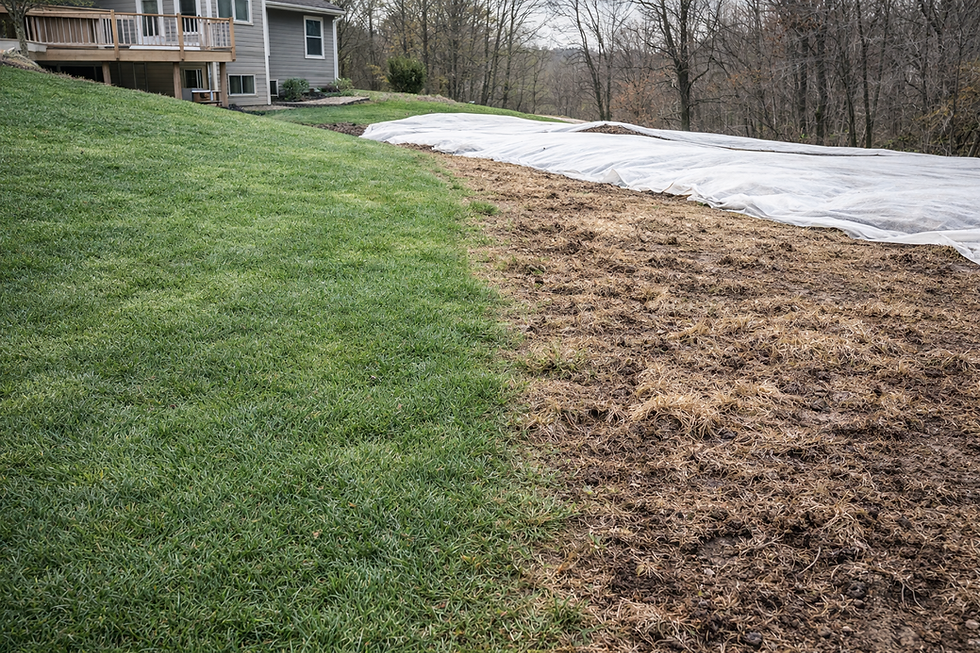
Row covers and frost blankets physically protect small areas or high-value sections. These spunbonded polypropylene fabrics trap ground heat and buffer temperature swings. Securing covers before freeze events and removing during warm days prevents overheating and maintains gas exchange. This labor-intensive approach suits small residential areas but becomes impractical for large lawns.
Windbreaks reduce desiccation following freeze events. Temporary snow fence, burlap screens, or even strategically parked vehicles block wind that accelerates moisture loss from thawing tissue. While not preventing freeze damage, wind protection reduces secondary desiccation mortality.
Mulch topdressing after germination provides ongoing protection. Light application of straw or additional fiber mulch insulates soil and seedlings through late spring freeze events. This technique proves particularly valuable for early-season hydroseeding that experiences germination before true frost-free conditions arrive.
Post-Freeze Assessment and Recovery
When freeze-thaw damage occurs despite prevention efforts, rapid assessment and response minimize losses.
Damage symptoms appear within days of freeze events. Seedlings turn water-soaked, then brown or gray as tissue dies. Desiccated areas appear tan and crispy. Heaved areas show roots exposed above grade or plants tilted from soil disruption. These symptoms distinguish freeze damage from disease or drought, guiding appropriate response.
Immediate rewatering follows thawing, preventing desiccation of damaged but surviving tissue. However, avoid saturation that exacerbates soil crusting or root rot in compromised plants. Light, frequent applications maintain moisture without overwhelming damaged root systems.
Re-seeding decisions depend on damage extent and timing. Spot repair suffices for limited damage when surrounding turf provides coverage. Complete reapplication becomes necessary for extensive failure, particularly when damage occurs early in the season allowing time for reestablishment. Delaying re-seeding until truly frost-free conditions prevents repeated failure.
Cultivation repairs heaving damage by resetting displaced soil and re-establishing root contact. Light rolling or hand pressing firms soil around exposed roots, followed by topdressing with compost or soil to cover exposed crowns. Irrigate immediately to settle soil and rehydrate tissue.
Patience allows partial recovery from moderate damage. Grass plants often retain basal buds that regenerate even when aerial tissue dies. Waiting two to three weeks after freeze events reveals actual mortality versus temporary setback, preventing unnecessary re-seeding of recovering areas.
Rochester-Specific Climate Considerations
Rochester's unique geography creates localized freeze-thaw patterns that influence hydroseeding success.
The Driftless Area topography generates cold air drainage that concentrates freezing in low spots. Valleys and depressions experience later last frosts and more severe freeze events than surrounding slopes. Avoid hydroseeding these microclimates until late May, even when higher areas seem safe.
Urban heat island effects in developed Rochester neighborhoods moderate temperature extremes. Areas near downtown, commercial districts, or industrial zones experience fewer freeze-thaw cycles than outlying rural properties. This permits slightly earlier scheduling, though the difference rarely exceeds one week.
Proximity to water features influences temperature stability. Large lakes, including Silver Lake and Lake Zumbro, moderate temperature swings in adjacent areas. Properties near these water bodies experience delayed spring warming but also reduced late freeze probability, creating different scheduling considerations than inland sites.
Snow cover provides insulation that protects soil from freezing and moderates temperature swings. Late snowstorms, common in Rochester's unpredictable springs, actually benefit hydroseeded lawns by maintaining stable conditions beneath the insulating layer. However, snow melt followed by clear, cold nights creates severe freeze-thaw risk as wet, exposed soil freezes rapidly.
Wind patterns across Rochester's varied terrain influence desiccation risk following freeze events. Exposed ridge tops and west-facing slopes experience more severe drying than protected valleys. Adjust protection strategies and irrigation management based on specific site exposure.
Long-Term Establishment Success
Beyond surviving freeze-thaw cycles, practices that promote rapid, robust establishment reduce vulnerability to all environmental stresses.
Appropriate seeding rates ensure adequate plant density without overcrowding stress. Standard hydroseed rates of three to four pounds per thousand square feet for Kentucky bluegrass blends provide optimal coverage. Excessive rates create competition that weakens individual plants, while insufficient rates leave bare soil vulnerable to erosion and weed invasion.
Post-germination fertility management builds hardiness without forcing tender growth. Starter fertilizer provides adequate initial nutrition. Delay additional nitrogen application until grass establishes sufficiently to withstand growth surge. Light potassium applications enhance stress tolerance without promoting succulence.
Mowing initiation at correct timing strengthens plants. Begin when grass reaches three inches, removing no more than one-third of height. This clipping stimulates tillering and root development that increases freeze-thaw resilience. However, avoid mowing when frost is forecast, as clipped plants are more vulnerable than uncut grass.
Traffic exclusion through establishment prevents compaction and physical damage that compounds freeze-thaw stress. Keep pets, children, and equipment off hydroseeded areas for eight to twelve weeks, longer if freeze-thaw cycles occur during establishment.
Frequently Asked Questions
When is the safest time to hydroseed in Rochester to avoid freeze-thaw damage?
Late May through early August provides the safest window, with soil temperatures consistently above fifty degrees and frost probability minimal. Early May applications risk late frost damage despite warming trends.
How late in fall can I hydroseed in Rochester?
Avoid hydroseeding after mid-September. While warm autumns occur, the risk of early freeze damage before adequate establishment outweighs potential benefits. Plan fall projects for late August through early September completion.
What temperature kills hydroseeded grass?
Germinating seedlings and young grass experience damage at temperatures below twenty-eight to thirty degrees, with severity increasing as temperatures drop. Established lawns tolerate lower temperatures, but new hydroseed remains vulnerable through first season.
Can I protect hydroseed from late spring frost?
Overhead irrigation during radiation frost events provides protection when temperatures stay above twenty-five degrees with calm winds. Frost blankets protect small areas. Heavy mulch rates and proper timing provide best insurance.
How do I know if freeze-thaw killed my hydroseed?
Symptoms appear within days: water-soaked then brown or gray tissue, tan crispy desiccated areas, heaved soil with exposed roots, or patchy death patterns following low spots. Assess two to three weeks after events to distinguish permanent damage from temporary setback.
Should I reseed if freeze damage occurs?
Spot repair limited damage when surrounding turf provides coverage. Complete reapplication for extensive failure, timing for truly frost-free conditions to prevent repeated damage.
Does hydroseed mulch protect against freezing?
Standard mulch provides modest insulation. Increasing mulch rates to twenty-five hundred to three thousand pounds per acre enhances protection. Bonded fiber matrix products offer superior temperature moderation.
How does soil type affect freeze-thaw damage in Rochester?
Clay soils heave more severely and drain poorly, exacerbating freeze damage. Sandy soils drain better but freeze more deeply. Compost amendment improves both soil types, moderating temperature swings and drainage issues.
Can I hydroseed over snow or frozen ground?
Never hydroseed over frozen ground. Seeds cannot germinate, mulch provides no protection, and spring thaw creates uneven, failed establishment. Wait until soil is workable and temperatures consistently appropriate.
What is the biggest mistake in spring hydroseeding in Rochester?
Scheduling too early based on warm spells or average frost dates rather than actual soil temperatures and extended forecasts. Conservative timing prevents most freeze-thaw failures.
How long after hydroseeding before grass survives freezing?
Established grass with two to three inch root systems and multiple tillers survives moderate freezing. This development requires six to eight weeks under optimal conditions, longer in cold springs with freeze-thaw stress.
Does wind affect freeze-thaw damage to hydroseed?
Wind accelerates desiccation after freeze events and prevents frost protection irrigation from working effectively. Windbreaks and careful irrigation management reduce wind-related damage.
Ready to protect your hydroseeding investment from Rochester's challenging freeze-thaw cycles? Rochester Sod & Hydroseed provides expert lawn establishment services with timing strategies, site preparation, and protective measures specifically designed for Minnesota's demanding climate. Our team understands the critical importance of soil temperature monitoring, appropriate scheduling within safe windows, and emergency protection when unexpected weather threatens your new lawn. We don't just apply hydroseed; we manage the entire establishment process with the knowledge that prevents costly spring failures and ensures your lawn thrives through its first critical season. From initial consultation through post-germination care, we guide you through every decision that affects freeze-thaw survival. Contact Rochester Sod & Hydroseed today to schedule your consultation and discover how professional expertise transforms risky spring projects into successful, lasting lawns.
Rochester Sod & Hydroseed: https://www.rochestersodandhydroseed.com/


Comments