Dead Grass Near Concrete Rochester MN: Causes & Solutions
- Apr 30
- 5 min read
Every very spring, homeowners across Rochester, Minnesota, step outside to assess their lawns after the final snowmelt, only to find a frustratingly familiar sight: a distinct strip of dead, yellow, or thinning grass bordering their concrete walkways, driveways, and sidewalks. As the summer progresses, these dead zones often transform into breeding grounds for aggressive weeds like crabgrass and creeping Charlie, ruining your property's curb appeal.
It is a persistent issue that plagues neighborhoods from Northwest Rochester down to the older, established homes near Mayo Clinic. But why exactly does grass struggle to survive next to concrete, and more importantly, how can you permanently fix it?
In this comprehensive guide, we break down the localized, seasonal causes of edge die-off in Southern Minnesota and offer professional sod and hydroseeding solutions to restore and protect the borders of your lawn.
The Thermal Mass Effect: Baking the Roots in Summer
Concrete is incredibly dense and acts as a thermal mass. During our hot, humid Minnesota summers, sidewalks and driveways absorb intense solar radiation throughout the day. Even after the sun sets, this concrete continues to radiate stored heat into the adjacent soil.
This localized heating accelerates moisture evaporation, essentially baking the topsoil right next to the walkway. Most lawns in Rochester consist of Kentucky Bluegrass, a cool-season grass that thrives in moderate temperatures. When the soil temperature bordering the concrete spikes, the grass roots undergo severe heat stress. If this area is not receiving supplemental watering above and beyond the rest of the yard, the grass will enter dormancy and eventually die, leaving a barren strip of dirt.
Winter Salt and De-Icing Chemical Damage
Rochester winters are notoriously brutal, and managing ice is a matter of safety. To combat frozen walkways, the city, commercial plow services, and homeowners rely heavily on rock salt and chemical de-icers.
While necessary for safety, these chemicals create a highly toxic environment for grass. When the snow melts in the spring, a concentrated dose of sodium and chloride is deposited directly into the soil along the edges of your walkways. This high salinity prevents grass roots from absorbing water, causing a condition known as physiological drought. Even if the soil is wet from spring rains, the roots are essentially dying of thirst. The salt also destroys the soil structure, turning our native Olmsted County clay into a hard, impermeable crust where new seed simply cannot germinate.
Soil Compaction and Snow Removal Damage
The soil immediately next to concrete is the most heavily trafficked area of your property. During the winter, the heavy wheels of snowblowers constantly roll over these edges. Furthermore, towering snowbanks piled up by plows place immense weight on the dormant grass underneath.
By the time spring arrives, the soil along the walkway is severely compacted. Grass roots require oxygen to survive, and compacted soil leaves no microscopic air pockets for the roots to breathe or expand. Without professional core aeration or physical tilling of these edges, the soil remains too dense to support healthy turf.
Construction Debris and Alkaline Runoff
If you live in a newer subdivision, the problem might trace back to when your home was built. When contractors pour concrete walkways and driveways, excess mortar, gravel base, and alkaline concrete dust are frequently left in the trench bordering the forms.
Builders often simply scrape a thin layer of topsoil over this debris before throwing down cheap seed. Concrete is highly alkaline, and as water runs off the walkway, it raises the pH of the adjacent soil far beyond the ideal range for turfgrass. Grass planted over shallow topsoil and buried concrete rubble will inevitably fail due to lack of rooting depth and nutrient lockout.
Realistic Costs for Repairing Walkway Edges in Rochester
Fixing the dead edges of a walkway requires more than simply throwing down a bag of seed from a local hardware store. Because the soil is compromised, professional remediation is required.
For edge restoration, a professional landscaping crew must excavate the contaminated, compacted dirt along the concrete, install fresh, nutrient-rich topsoil, and lay premium sod. Because cutting narrow strips of sod and manually excavating soil is highly labor-intensive, edge patching is priced differently than laying a large, open yard.
In the Rochester area, you can expect to invest between $3.00 and $5.00 per square foot for premium edge repair. For a standard 50-foot residential walkway with damage on both sides, a professional restoration typically ranges from $300 to $600.
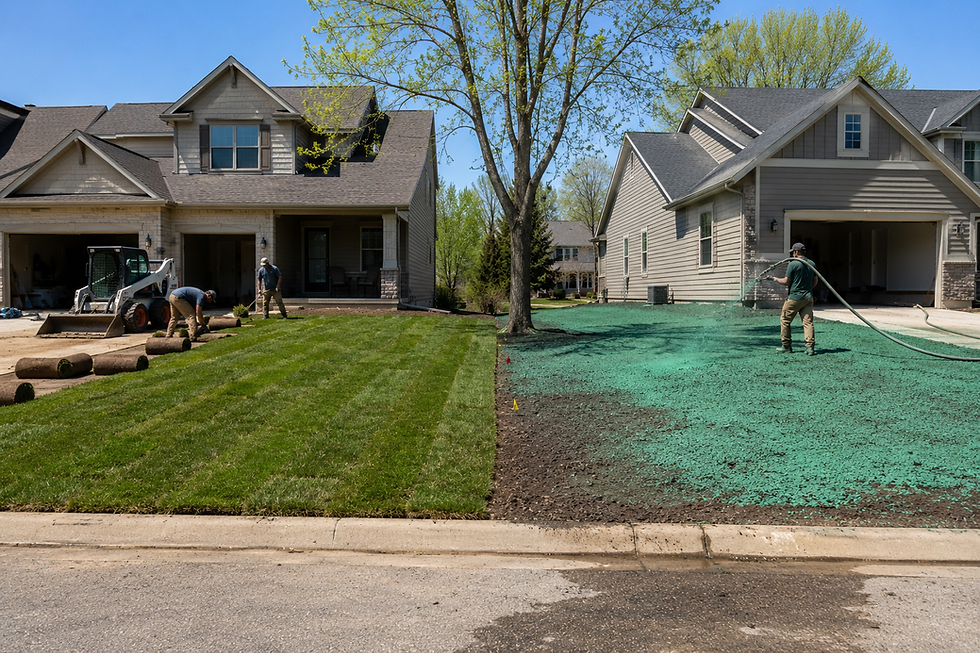
If the damage extends along a massive driveway or a long rural property line, professional hydroseeding becomes a much more cost-effective option. While the per-square-foot cost of hydroseeding is much lower (typically $0.15 to $0.25), most reputable companies will have a minimum service or mobilization fee ranging from $400 to $600 to bring the hydroseeding truck and crew to your property for targeted edge repairs
How to Prevent Dead Grass Near Concrete Rochester MN
Once your edges are professionally repaired with fresh sod or hydroseed, preventative maintenance is key to protecting your investment.
Flush the Soil in Spring: As soon as the ground thaws in late March or early April, heavily water the edges of your walkways to leach the winter salts deeper into the soil profile and away from the root zone.
Apply Gypsum: Pelletized gypsum can help reverse winter salt damage by displacing the sodium in the soil, improving drainage and soil structure.
Adjust Your Watering: During July and August, hand-water the two feet of grass bordering your concrete to counteract the thermal heat radiating from the hardscape.
Create a Hardscape Buffer: If the area is simply too trafficked or heavily salted to support grass, consider having a professional install a 12-inch border of decorative river rock or paving stones between the concrete and the lawn.
Frequently Asked Questions
Can I just plant new grass seed over the dead edge?
No. If the grass died due to salt accumulation or soil compaction, new seed will not survive. The contaminated top layer of soil must be removed and replaced with fresh, healthy topsoil before laying new seed or sod.
Are there grass types that resist salt damage better?
Yes. While Kentucky Bluegrass is the standard in Minnesota, certain fine fescue and tall fescue blends have a much higher tolerance for salt. A professional hydroseeding company can mix a custom, salt-tolerant slurry specifically for the edges of your driveway.
Should I water the concrete edges more than the rest of the lawn?
During the peak heat of summer, yes. The concrete absorbs heat and dries out the adjacent soil much faster than the center of your yard. Targeted watering is required to keep these edges green.
How far back should a professional cut the dead grass before laying sod?
A professional landscaper will typically excavate at least 6 to 12 inches past the visible dead zone to ensure they are laying the new sod on completely healthy, uncontaminated soil.
Will a physical edge barrier help protect the grass?
Installing a commercial-grade plastic or steel landscape edge between the concrete and the grass can help slightly with water runoff, but it will not stop the thermal heat or the weight of snowbanks from impacting the grass.
What is the best time of year to repair dead lawn edges in Minnesota?
Late spring (May) or early fall (September) are the ideal times. The temperatures are moderate, allowing new sod or hydroseed to establish deep roots without battling the extreme heat of summer or the freezing temperatures of winter.
Restore Your Curb Appeal with River Bluff Landscaping
Stop battling the same dead strips of grass year after year. If your walkways and driveways are bordered by brown, failing turf, it is time to address the root of the problem.
To permanently fix dead grass near concrete Rochester MN homeowners should contact River Bluff Landscaping today for a professional consultation. Whether you need precise sod patching along a front walkway or a custom, salt-tolerant hydroseed blend for a long driveway border, our team has the local expertise to restore your property's curb appeal. Reach out today to schedule your estimate and get your Rochester lawn back in perfect shape.


Comments